GEOTECHNICAL ENGINEERING · RESEARCH · PRACTICE
Learn Geotechnical FEM with Efficiency. Automate Workflows with Confidence.
Learn finite element modeling, automate repetitive workflows, and use focused online calculators for everyday geotechnical problems.
✓ Research-Based ✓ Engineering-Validated ✓ Industry-Oriented ✓ Friendly for beginners and professionals
Learn smart Work fast
FIND YOUR NEXT STEP
What are you here to do?
Learn finite element modeling, perform geotechnical calculations, automate engineering workflows, and explore research-driven solutions.
Automate
Downloadable scripts and tools for more efficient, repeatable workflows.
LEARN WITH VERIFIED EXAMPLES
Featured tutorials
For student, researcher, or practicing geotechnical engineer, designed to help you learn faster, avoid common modeling mistakes, and confidently apply to real engineering projects.
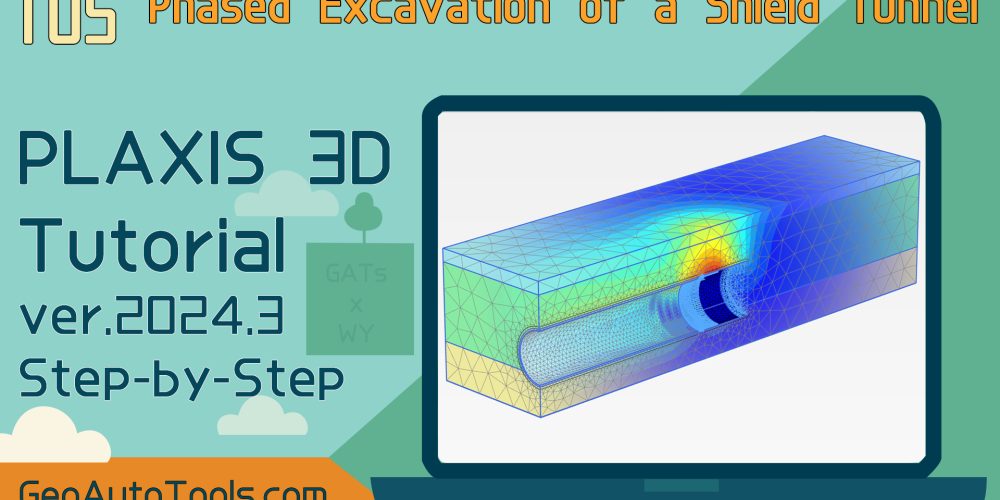
FEM · PLAXIS 3D · TUNNEL 🔥
Phased Excavation of a Shield Tunnel in Plaxis 3D
Simulate shield tunneling with Tunnel Designer and staged TBM advancement.
#ShieldTunnel #TunnelDesigner #TBM #Tunnel #PLAXIS3D
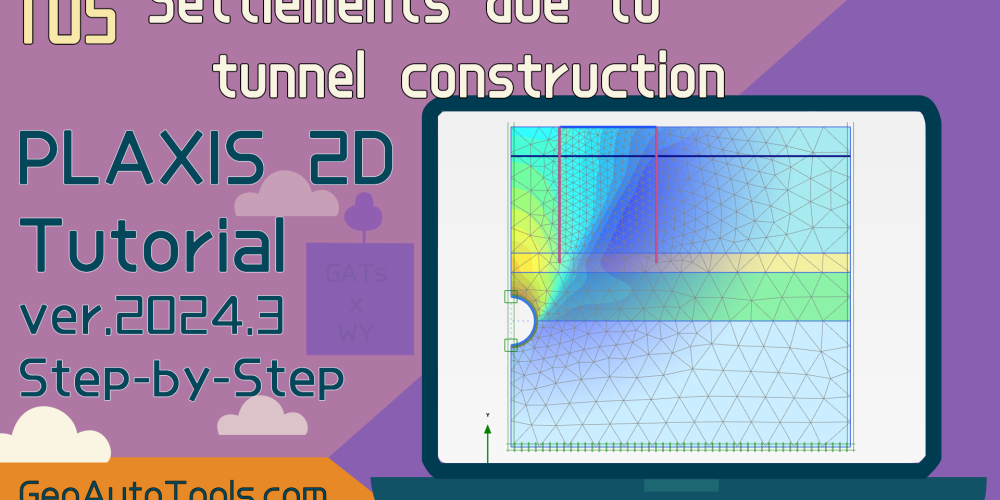
FEM · PLAXIS 2D · INTERACTION 🔥
Settlements Due to Tunnel Constructionin Plaxis 2D
Evaluate tunnel-induced settlements using TBM staged construction.
#Tunnel #TBM #Settlement #StagedConstruction #PLAXIS2D
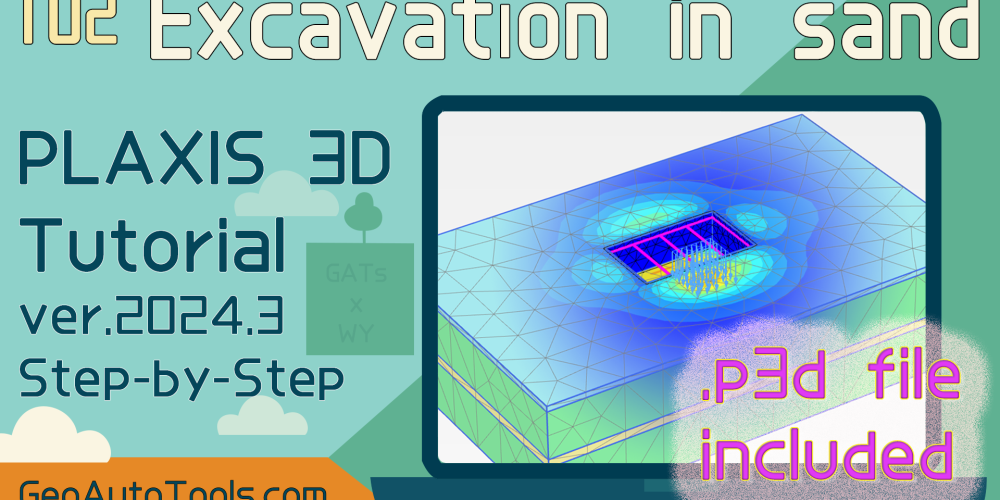
FEM · PLAXIS 3D · EXCAVATION 🔥
Excavation in Sand in Plaxis 3D
Simulate deep excavation with sheet piles, struts, and anchors.
#Excavation #SheetPile #Strut #Anchor #PLAXIS3D
FEM · PLAXIS 2D · SLOPE 🔥
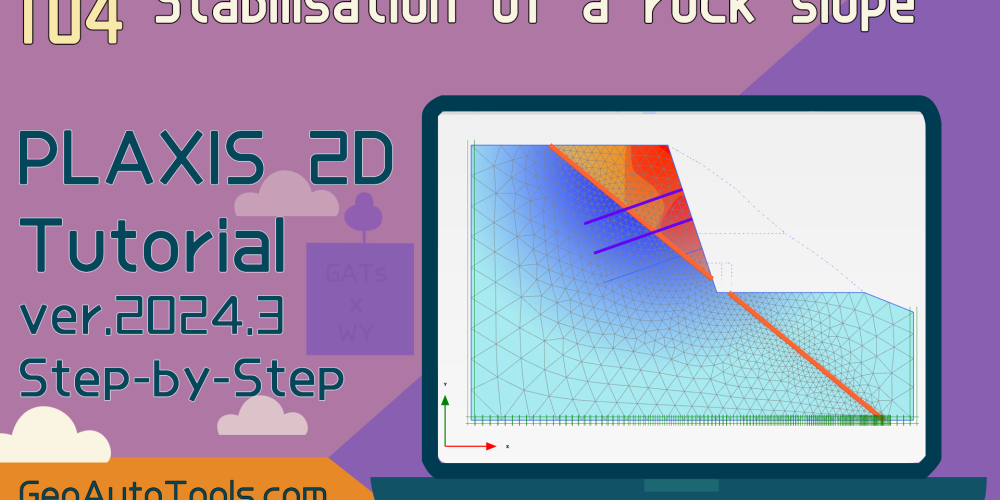
Stabilisation of a Rock Slope in Plaxis 2D
Simulate diaphragm wall excavation using plate and interface elements.
#RockSlope #CableAnchor #RetainingWall #SafetyAnalysis #PLAXIS2D
PLAXIS 2D · BEGS & PROS · VERIFIED📚🎥
Learn Plaxis 2D in 10+ mins with All 20 Official Cases
From input to output, step-by-step tutorials with verified results, no hesitation, no misleading.
Covers shallow foundations, embankments, excavations, tunnels, seepage, pile driving, dynamic loading, thermal analysis, and ground improvement…
PLAXIS 3D · BEGS & PROS · VERIFIED📚🎥
Learn Plaxis 3D in 10+ mins with All 11 Official Cases
From input to output, step-by-step tutorials with verified results, no hesitation, no misleading. Covers foundation systems, deep excavations, suction piles, shield tunneling, embankments, dam stability, and dynamic soil–structure interaction…
Latest tutorials
New and recently updated online tutorials
USE INSTANTLY IN YOUR BROWSER
Featured online calculators
Lightweight apps for common geotechnical calculations. No download required.
ONLINE · NO DOWNLOAD
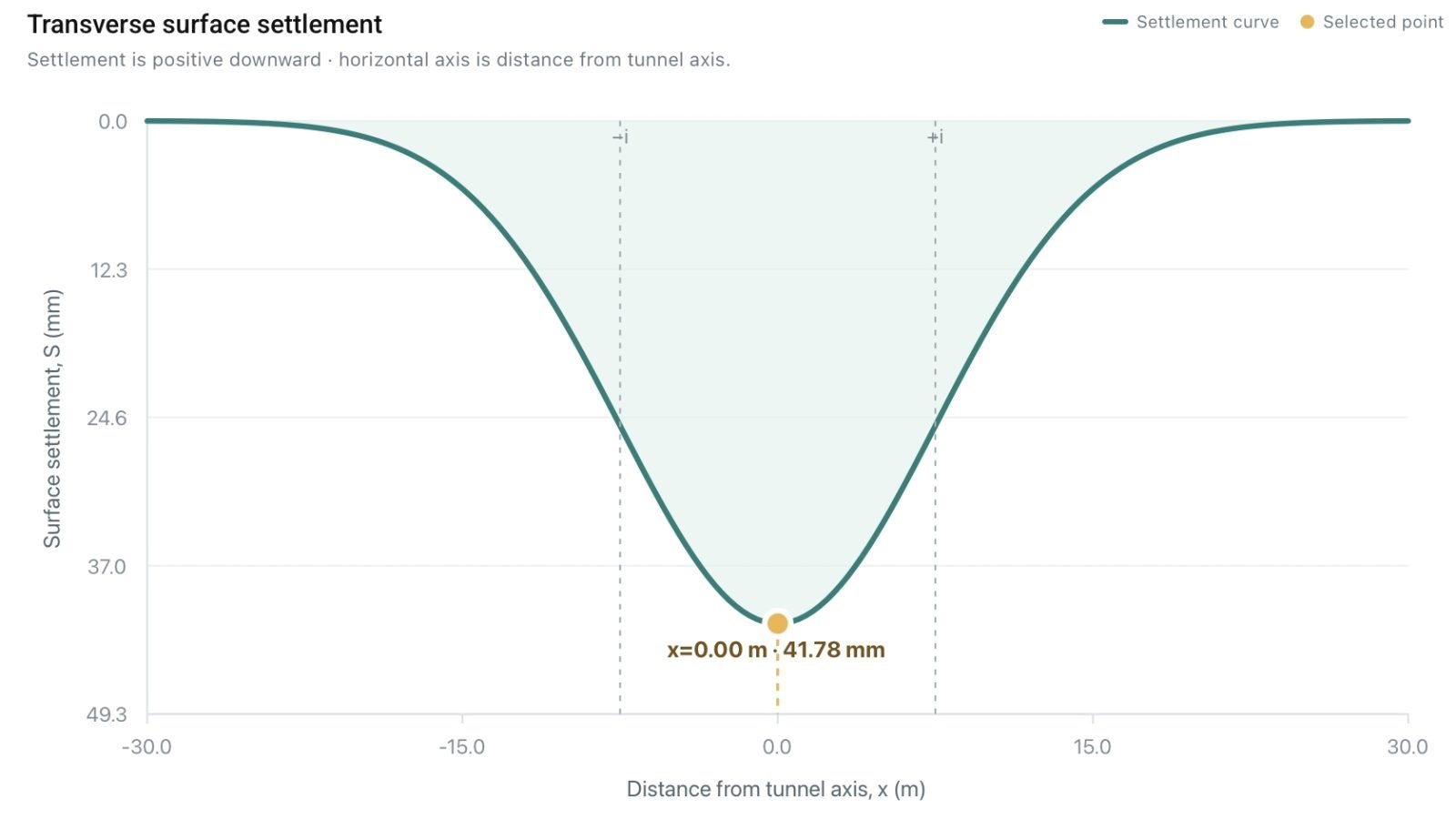
Gaussian settlement calculator
Input: Tunnel diameter, burial depth, settlement trough width coefficient, and ground loss ratio.
Output: Gaussian settlement curves and settlement data.
Application: Rapid assessment of ground surface settlement for circular tunnels.
ONLINE · NO DOWNLOAD
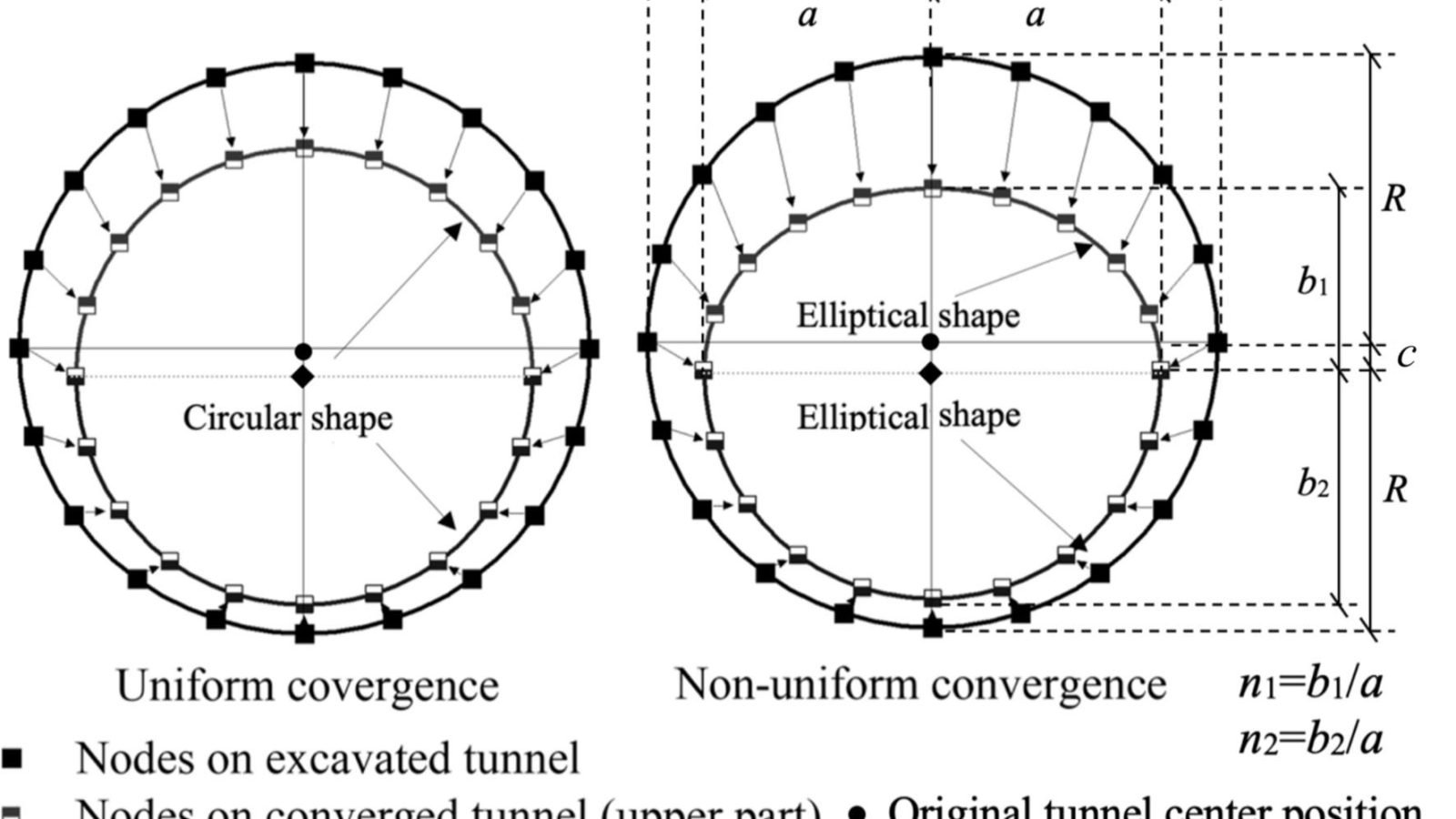
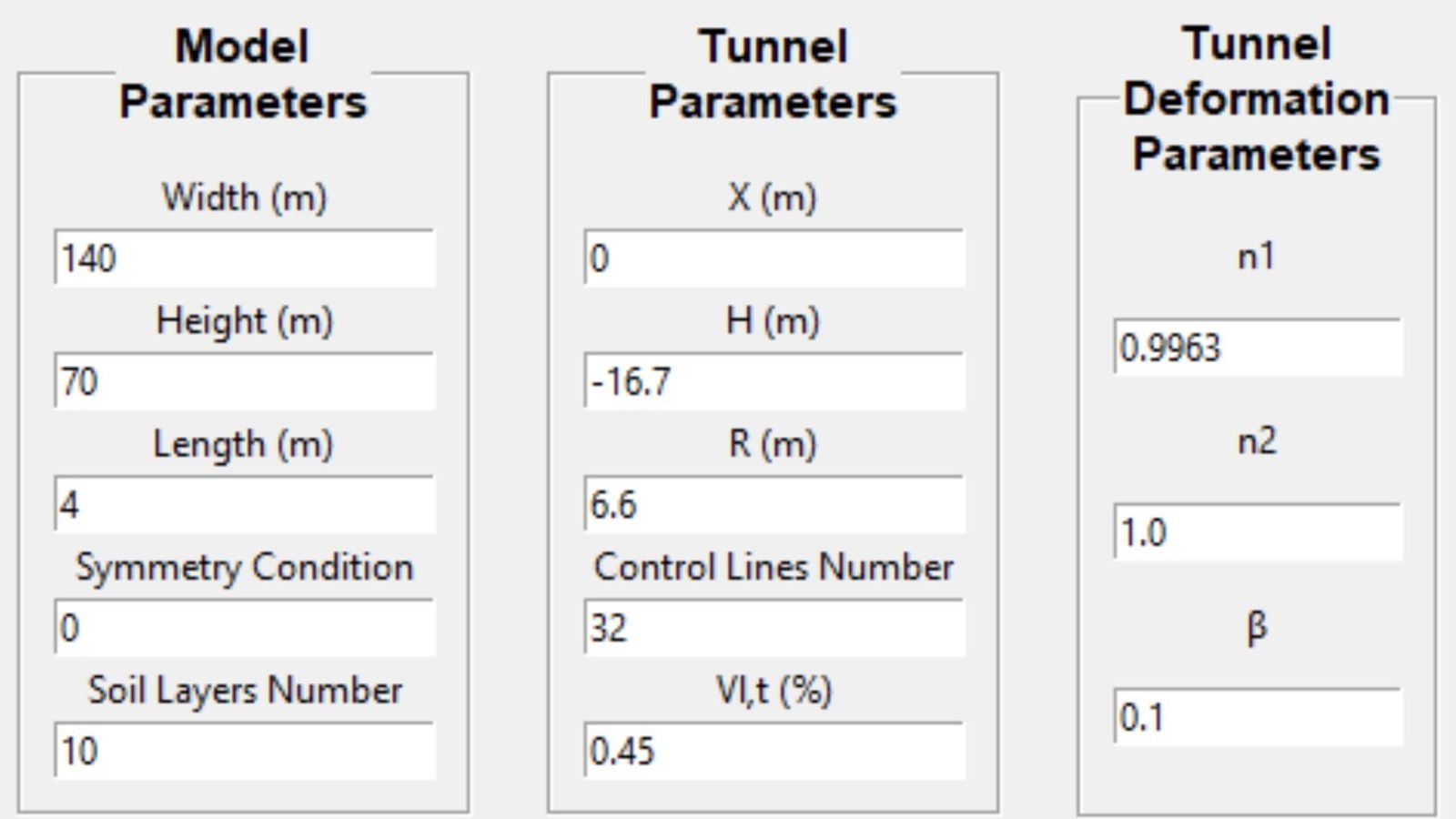
Tunnel boundary displacements calculator for Bi-Elliptical DCM
Input: Tunnel coordinates, diameter, ground loss ratio, and deformation parameters (n1, n2 and β).
Output: Tunnel cross-sectional contraction displacement and contracted coordinates.
Application: Finite element displacement input for circular tunnel analysis
RUNS IN YOUR BROWSER
More engineering calculators
Browse practical browser-based calculators for recurring geotechnical calculations.
Latest calculators
New and recently updated online calculators
DOWNLOAD AND USE IN YOUR WORKFLOW
Featured automation tools
Scripts and utilities to make modeling tasks more efficient and repeatable.
DOWNLOADABLE · PLAXIS
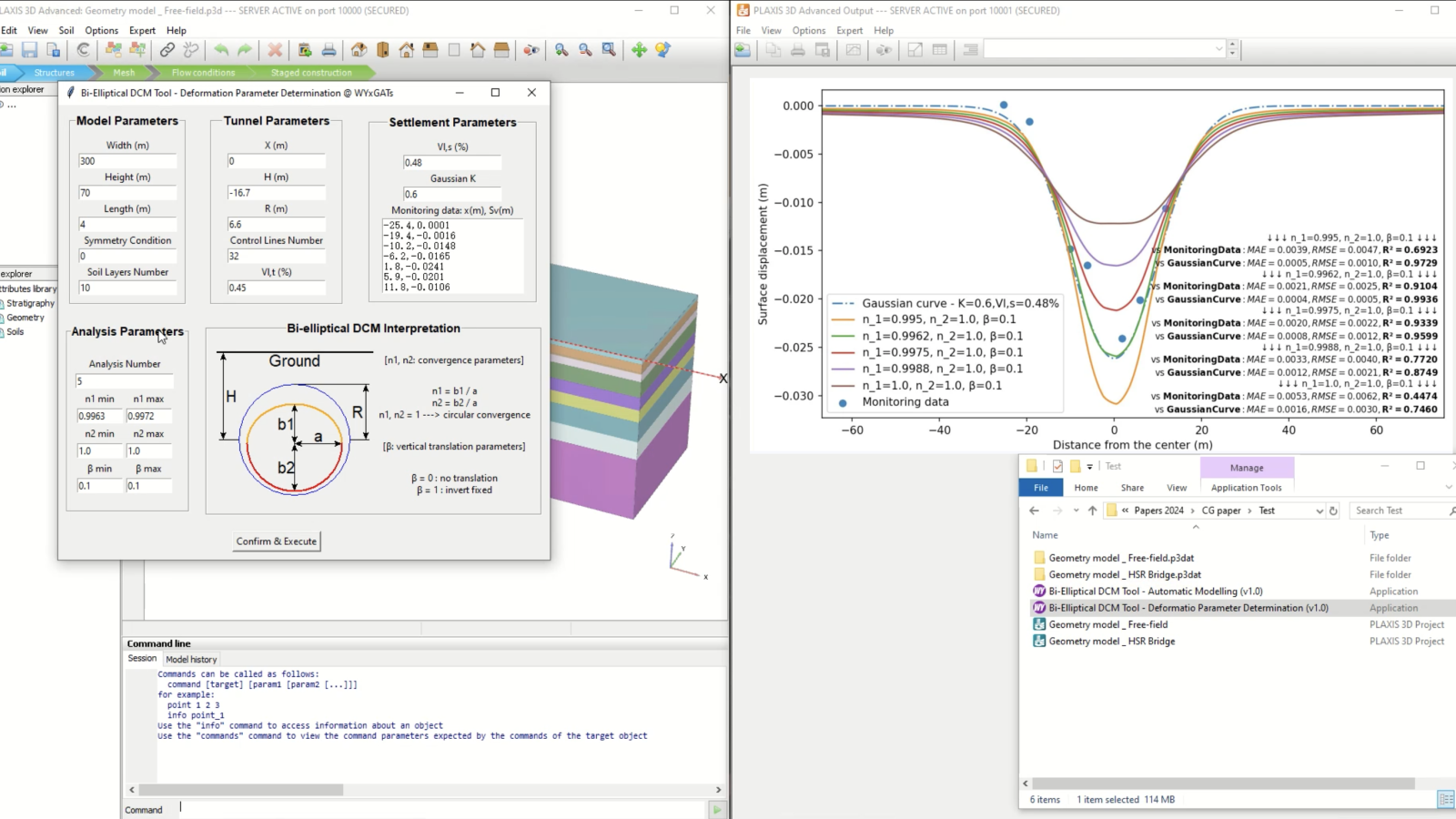
Deformation parameter determination tool for Bi-elliptical DCM
Input: Ranges of deformation parameters (n₁, n₂, and β) and tunnel parameters
Output: Automated PLAXIS 3D tunnel models, parametric analysis results, and comparison of surface settlement curves with Gaussian predictions and/or monitored data
Application: Calibration of deformation parameters for the Bi-elliptical Displacement-Controlled Method using PLAXIS 3D
DOWNLOADABLE · SCRIPT
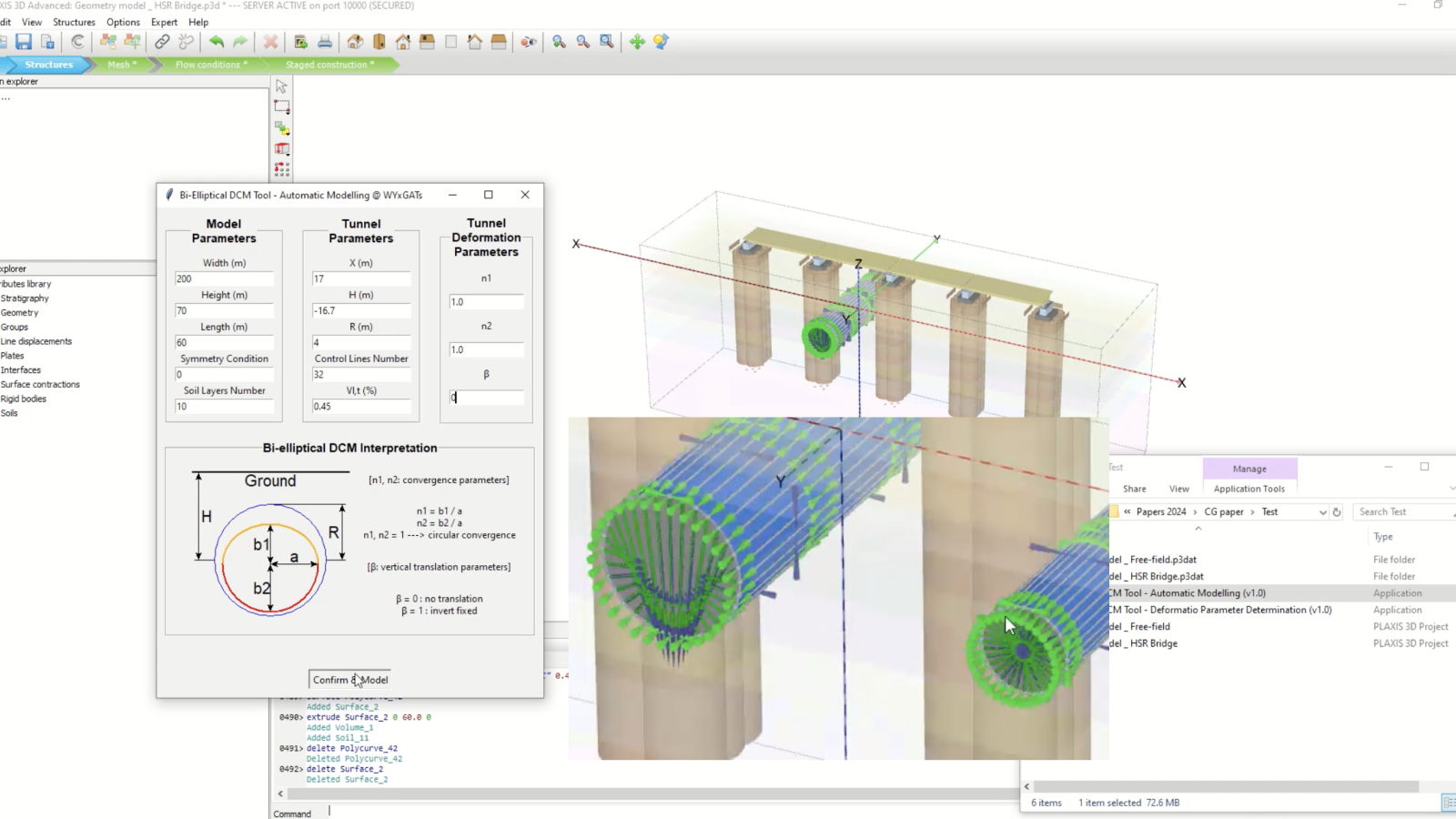
Automatic modelling tool for Bi-elliptical DCM
Input: Tunnel geometry, deformation parameters (n₁, n₂, and β), and ground conditions
Output: Automatic tunnel generation and cross-sectional displacement assignment in any PLAXIS 3D model
Application: Rapid implementation of the Bi-elliptical Displacement-Controlled Method for finite element analysis in PLAXIS 3D
DOWNLOADABLE · TOOLKIT
More automation tools ...
Automatic Modeling and Analysis Tool
3D Shield Tunneling; 3D Foundation; 2D NATM Tunnel ; 2D Pile Driving; 3D Deep Excavation; 2D Slope Stability…
PLAXIS Results Extraction and Processing Tool
Ground Surface Settlement Extraction for Shield Tunneling; Structural Element Internal Force Contour Plots; Multi-Phase Results Extraction at Specified Points…
Latest automation tools
New and recently updated automation tools
RESEARCH BEHIND THE PRACTICE
Featured researches
Selected publications and research outputs that inform the methods and tools shared here.
Latest · Yang, W., & Boldini, D. (2027).
🆕Deformation parameters for the Bi-Elliptical Displacement-Controlled Method and related tunnel deformation modes
This study investigates the deformation characteristics of shield tunnel cross-sections using a step-by-step three-dimensional finite element method and proposes recommended parameters for the Bi-Elliptical Displacement-Controlled Method (Bi-Elliptical DCM). The advanced Hardening Soil model with small-strain stiffness was adopted to simulate soil behaviour, and model reliability was validated using the Gaussian settlement trough expression and Kirsch solution. More than 700 numerical cases were analysed considering different soil conditions, tunnel diameters, buried depths, and tunnel volume losses. The results show that tunnel deformation is primarily controlled by soil characteristics, followed by tunnel diameter and buried depth. In coarse-grained soils, tunnel cross-sections exhibit pronounced bi-elliptical deformation, especially for large and deep tunnels, whereas fine-grained soils generally show circular contraction patterns. Based on the numerical results, reference charts for the Bi-Elliptical DCM parameters n1, n2 and β are proposed to enable rapid prediction of tunnelling-induced deformation. The findings improve understanding of shield tunnel deformation mechanisms and provide practical guidance for applying the Bi-Elliptical DCM in engineering projects.
Recommended· Yang, W et al. (2025).
🔥Impact of a large and shallow twin-tunnel excavation on a high-speed railway bridge and related protective measures: A case study
This case study examines a landmark engineering project in Suzhou, China, involving the construction of two large-diameter (13.2 m) shield tunnels beneath an active high-speed railway (HSR) bridge. This pioneering project is the first of its kind in both China and the world. Advanced numerical simulations were conducted to rigorously assess construction risks. To ensure the operational safety of the existing HSR bridge, an innovative protective system, consisting primarily of segmental steel casing concrete pile barriers, was employed. A comprehensive network of monitoring sensors was strategically deployed to track soil, pile barrier, and pier displacements throughout both the protective and tunnelling phases. Simulation results indicated that tunnelling without protective measures could cause pier displacements of up to 3.1 mm along the bridge—exceeding the maximum allowable displacement of 2 mm in accordance with regulations. Monitoring data revealed that the maximum pier displacement during protective scheme installation was limited to 0.5 mm. With these protective measures, pier displacement during each tunnelling phase remained consistently below 0.5 mm, representing an approximate 80% reduction compared to the unprotected scenario, thereby ensuring the continued safety of the HSR bridge.
Recommended· Yang, W et al. (2025).
👍🌟Development and Application of the Bi-Elliptical Displacement-Controlled Method for Improving TBM Tunnelling Simulations
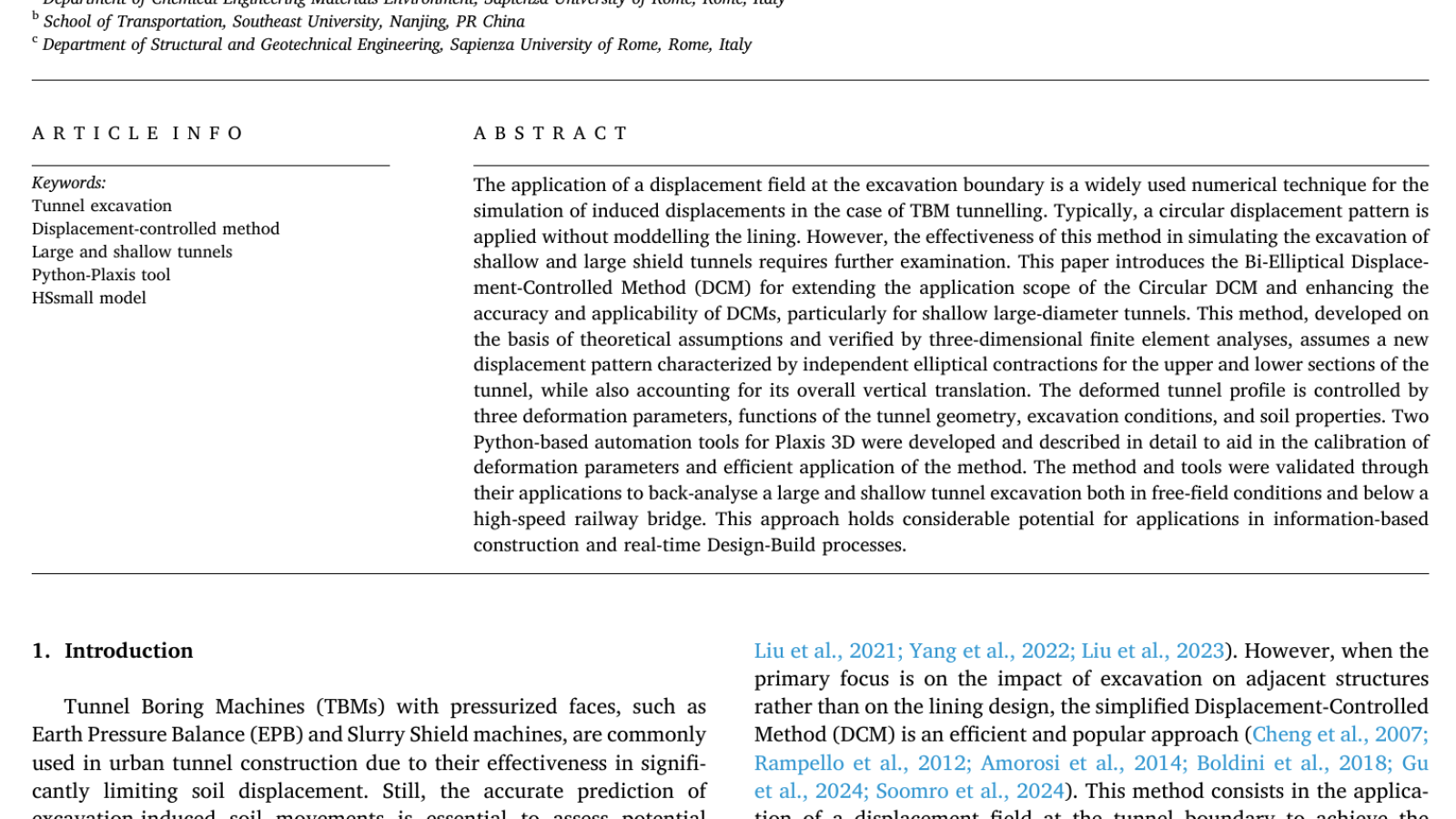
The application of a displacement field at the excavation boundary is a widely used numerical technique for the simulation of induced displacements in the case of TBM tunnelling. Typically, a circular displacement pattern is applied without moddelling the lining. However, the effectiveness of this method in simulating the excavation of shallow and large shield tunnels requires further examination. This paper introduces the Bi-Elliptical Displacement-Controlled Method (DCM) for extending the application scope of the Circular DCM and enhancing the accuracy and applicability of DCMs, particularly for shallow large-diameter tunnels. This method, developed on the basis of theoretical assumptions and verified by three-dimensional finite element analyses, assumes a new displacement pattern characterized by independent elliptical contractions for the upper and lower sections of the tunnel, while also accounting for its overall vertical translation. The deformed tunnel profile is controlled by three deformation parameters, functions of the tunnel geometry, excavation conditions, and soil properties. Two Python-based automation tools for Plaxis 3D were developed and described in detail to aid in the calibration of deformation parameters and efficient application of the method. The method and tools were validated through their applications to back-analyse a large and shallow tunnel excavation both in free-field conditions and below a high-speed railway bridge. This approach holds considerable potential for applications in information-based construction and real-time Design-Build processes.
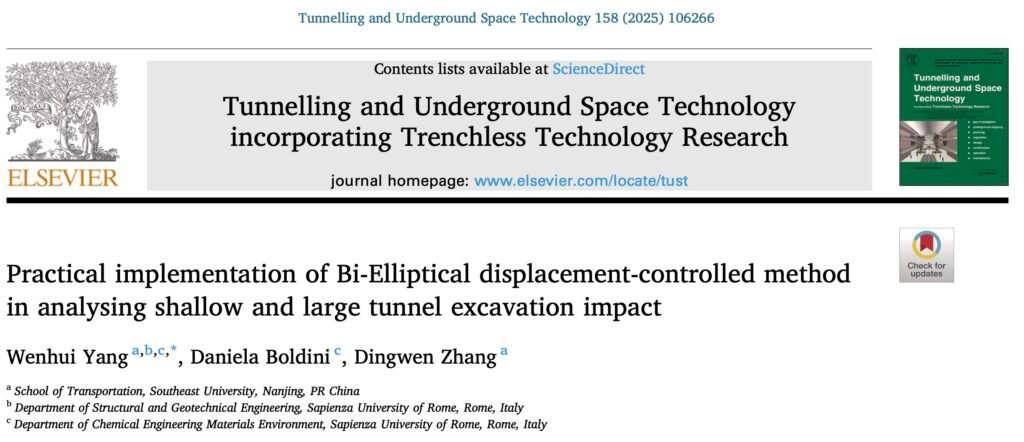
Latest · Yang, W., & Boldini, D. (2027).
👍🌟Practical implementation of Bi-Elliptical displacement-controlled method in analysing shallow and large tunnel excavation impact
This study investigates the deformation characteristics of shield tunnel cross-sections using a step-by-step three-dimensional finite element method and proposes recommended parameters for the Bi-Elliptical Displacement-Controlled Method (Bi-Elliptical DCM). The advanced Hardening Soil model with small-strain stiffness was adopted to simulate soil behaviour, and model reliability was validated using the Gaussian settlement trough expression and Kirsch solution. More than 700 numerical cases were analysed considering different soil conditions, tunnel diameters, buried depths, and tunnel volume losses. The results show that tunnel deformation is primarily controlled by soil characteristics, followed by tunnel diameter and buried depth. In coarse-grained soils, tunnel cross-sections exhibit pronounced bi-elliptical deformation, especially for large and deep tunnels, whereas fine-grained soils generally show circular contraction patterns. Based on the numerical results, reference charts for the Bi-Elliptical DCM parameters n1, n2 and β are proposed to enable rapid prediction of tunnelling-induced deformation. The findings improve understanding of shield tunnel deformation mechanisms and provide practical guidance for applying the Bi-Elliptical DCM in engineering projects.

Ph.D. in Geotechnical and Structural Engineering from Sapienza University of Rome
RESEARCH-LED · BUILT FOR PRACTICE
Created by Dr. Yang, geotechnical researcher & engineer.
I am a researcher in computational geotechnics, dedicated to bridging academic research and engineering practice through automation, software development, and knowledge sharing.
With over 15 years of experience in geotechnical engineering and 10+ years in finite element modeling, my work focuses on developing practical, research-driven solutions that improve the efficiency, reliability, and reproducibility of geotechnical analysis.
My research interests include large-diameter shield tunnel construction, slope stability, geotechnical automation, and AI-assisted engineering workflows. I have published multiple peer-reviewed papers in journals including Tunnelling and Underground Space Technology, Computers and Geotechnics, Underground Space and developed the Bi-Elliptical DIsplacement-Controlled Method method.
Through GeoAutoTools, I share tutorials, engineering tools, and computational resources to help students, engineers and researchers spend less time on repetitive tasks and more time solving meaningful engineering and academic problems.
A LITTLE MORE ABOUT US
Questions worth asking.
Get to know the person, principles, and practical experience behind the tutorials and tools.
Who creates the content on this site?
The site is founded and created by Dr. Wenhui Yang, a geotechnical researcher working with numerical modeling and practical engineering problems. Read more about my background and research on the About page.
How are the tutorials and tools checked?
Resources are developed from research and modeling experience. Where relevant, each tutorial or tool includes its assumptions, software version, example cases, and validation notes so you can assess how it applies to your work.
Is this site only about PLAXIS?
PLAXIS is the main focus today. The wider goal is to share reliable finite element learning and automation practices, with room to cover other geotechnical software as the resource library grows.
Can you help with training or a specific project?
For course, training, or consulting enquiries, get in touch and describe your topic, software, and goals. Availability and scope can be discussed individually.